Beyond the red carpet: The growing role of sustainability in Hollywood
TV and film production has increased dramatically over the last few decades (with the exception of COVID-19), costing over £6.8 billion in 2025, an increase of 22% from 2024, according to official BFI statistics. However, there is a hidden cost that many do not consider when the newest movie is released, which is far less well-known.
What are the problems?
As of 2022, the average carbon footprint of a 1 hour scripted drama production was 105.4 metric tons of carbon per episode, according to a report from the Sustainable Entertainment Alliance. This is the equivalent to the emissions of around 9 people in the UK over a whole year, per episode. Bearing in mind that most scripted TV shows have around 18 episodes per season, and multiple seasons sometimes spanning decades of production, this is an extortionate amount of emissions and a huge contributor to the greenhouse gas effect. However large this may sound, it is shadowed by the amount of emissions from a feature film, specifically a blockbuster, which has an average carbon footprint of just under 3,000 metric tons – 42.4 tons per shooting day. The main emissions come from fuel consumption as a result of transportation and temporary power generators, according to the Sustainable Entertainment Alliance. Most large production companies blame the COVID-19 pandemic for these numbers as protocols resulted in more emissions, however emissions were just as high before COVID, so many feel this is just an easy copout.
In the wider scheme of Hollywood, there is a large amount of hypocrisy. Leonardo DiCaprio is a famous example of this, who claims to be a climate activist because of his environmental organisation and use of his platform to promote sustainability, but has been heavily criticised for travelling by private jet to pick up an environmental award and chartering one of the largest mega-yachts. He is not the only one, and it can be difficult to take celebrities seriously when they are preaching for us to be more sustainable while not following their own words.
What is being done?
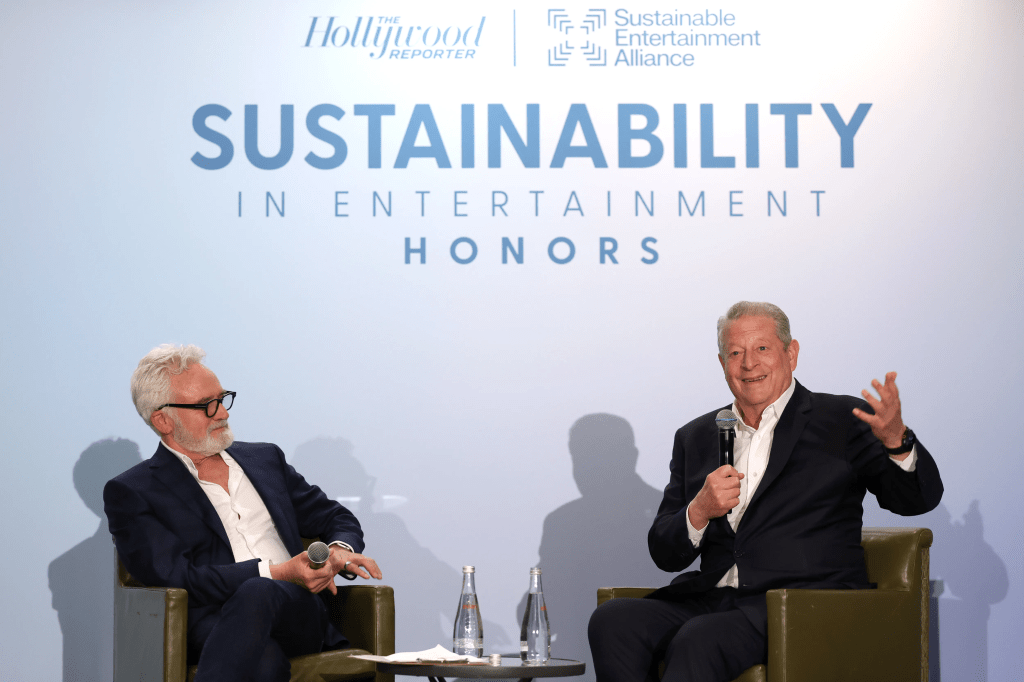
Just over a week ago, on April 23rd, a select number of stars met for the Sustainability in Entertainment Honours, hosted by the Hollywood Reporter in partnership with the Sustainable Entertainment Alliance. While not as widely broadcasted as other awards shows, it highlights film and tv shows which have made a positive impact for the environment. Winners included ‘Paradise’ and ‘Greys Anatomy’ for their sustainable storytelling, and ‘The Boroughs’ for its sustainable practices during production.
Sustainable practices on sets include solar-powered trailers, solar battery systems, hydrogen power units instead of diesel and the use of electric vehicles to transport equipment. On the set of The Boroughs, all of these measures in combination cut reliance on fuel by over 75%, saving almost 13,000 gallons of fuel according to Netflix. Another notable mention is the newly released APEX, which is ‘the first production in Australia to use a hydrogen power unit’, reducing fuel usage by over 50%. While it is still the case that not all productions have sustainability as a priority, the hope is that the ones that do, will lead the way in reducing emissions throughout the entertainment industry.
In relation to the awards given to Paradise and Greys Anatomy, these where for specific episodes and storylines which highlighted the challenges faced as a result of climate change. The link between climate and health is rarely part of climate change conversations, but by subtly including it in their storytelling, Grey’s Anatomy is putting it at the forefront of audience’s minds. Episodes including ‘Snowblind’ (Season 16, episode 15) and ‘Things we lost in the fire’ (Season 12 episode 8) show how extreme events caused by global warming can impact all areas of the hospital. Although some aspects are dramatized for the show, the hope is that more people gain awareness of the impacts of global warming and are inspired to make a difference.
There have already been reported benefits of these practices by The Sustainable Entertainment Alliance, including roughly a 20% decrease in average emissions from feature films between 2016 and 2022. With Sustainability starting to become more of a priority for large production companies such as Netflix and ABC Studios, hopefully, reductions will continue to decrease.
Links
https://www.bfi.org.uk/news/official-bfi-statistics-2025
https://ecologi.com/articles/blog/the-hidden-impact-of-film-and-tv-production
https://www.sustainableentertainmentalliance.org/
https://www.shondaland.com/shondaland-series/greys-anatomy/greys-anatomy-climate-change
https://www.edenseven.co.uk/what-does-a-tonne-of-co2-look-like

